Pages of My Life – Amy Walsh
No Passport Required: Tips for Armchair Travelling
I absolutely love being part of a team of authors who write stories set in other countries. As I read the other books in our series, I get to disappear from my Pennsylvania home for a few hours, usually with a cup of tea and my notebook nearby. And, I get all the benefits of traveling without braving airport traffic, hauling luggage, or wrestling my carry-on into an overhead bin while everyone behind me waits.
Our first Our House adventure took us to England, near the mouth of the River Deben. The next carried us north to the Scottish Highlands. And now our newest collection has transported us much farther from home. We are traveling to the Garden Route of South Africa.
Reading these books from the author side of things has actually changed the way I read as a reader, if that makes sense. I’m a fast reader. My brain automatically uses context clues to figure out unfamiliar words and phrases, and then instantly I’m off again, chasing the plot. I don’t always stop long enough to appreciate all those little details an author has tucked into the story. I’ve discovered that those little details are part of what makes armchair traveling through a book so much fun.
Join Amy Walsh today on Pages of My Life! #Reading #Readingcommunity # BRRC Share on XSo, after three Our House adventures spent reading, researching, and writing my way around the world, I’ve picked up a few tips for getting the most out of visiting a place you’ve never actually been.
Armchair Travel Tip #1
Never assume you know how to pronounce a word, or know what it means, just because it contains letters you recognize.
Other regions have had centuries to name and pronounce places before America was even a country. Then we Americans came along and thought we could just sound them out. How adorable of us.
Sometimes it’s pronunciation. A character who might hesitate with an um in Pennsylvania might use something closer to em in the Highlands.
Sometimes it’s vocabulary. A British character pulls on a jumper, but to me, jumpers are those overall dresses my Grammy used to make for me to wear. Crisps are chips, while chips are fries. Travel all the way to South Africa, and a robot might simply be the traffic light telling you to stop.
And then there are the words my American brain insists on translating incorrectly. Take rusks from SA. They’re twice-baked breads or biscuits meant for dunking in coffee or tea, but every time I read the word, my brain wants to picture corn husks.
Even worse were mealies. They’re maize, and a roasted mealie is essentially what I’d recognize as corn on the cob. Unfortunately, after all those elementary-school science lessons involving mealworms, mealie sounded far more wormy than appetizing to me.
A favorite activity while reading has been to have my phone handy to ask Google something like “How do they pronounce aluminum in the UK?” Go ahead. Do it! That’s one of my favorites. We’ve all heard the line “I say tomato, you say tomato,” but lets try vitamin (VIT-uh-min rather than VY-tuh-min), herb (the H is pronounced), garage (often GARR-ij), mobile (MOH-byle). It’s so much fun!
Armchair Travel Tip #2
Pay attention to what grows, crawls, flies, or slithers in the background.
Sometimes the best clues that I’ve traveled somewhere new aren’t part of the plot at all. They’re growing beside the road, calling from a tree, or—yikes!—creeping across a garden wall.
Over the course of our Our House adventures, we’ve had a community hedgehog, a South African pavement special (an endearing name for a mixed-breed street dog) whom the fictional townspeople affectionately named Rubbish, and, in the Highlands, plenty of jokes about Nessie. (I’m still waiting for one of the authors to provide definitive photographic evidence.)
The plants have been just as interesting. Scottish gorse, for example, surprised me because from a distance its yellow blooms reminded me a little of the ragweed growing along Pennsylvania roadsides. Get closer, though, and the resemblance ends. Gorse flowers are said to have a lovely coconut-mixed-with-almond-like scent, which is considerably more appealing than anything I’ve ever associated with ragweed. Sneeze.
South Africa brought an entirely new collection of plants and creatures to investigate. And sometimes reading about them isn’t enough. That’s when I Google the sounds. If an author mentions an unfamiliar bird calling outside a character’s window, I want to know what that character is actually hearing. The hadeda ibis, a familiar bird along South Africa’s Garden Route, is a perfect example. Looking at a picture is one thing. Googling its call is quite another. Its loud haa-haa-haa-de-dah is not exactly fairy tale background birdsong. Suddenly, I’m not just reading that a bird called from somewhere outside the house. I can hear the setting.
That’s one of my favorite tricks for armchair traveling. Look up the flower. Find a picture of the animal. Google the bird call. Listen to the ocean, the insects, or even the local frogs mentioned in a story. Find a YouTube video of a river. Those little details can turn words on a page into a place that feels surprisingly real.
Of course, armchair travel still has one distinct advantage over the real thing. If the local wildlife has too many legs, no legs, or particularly large teeth, I can simply click the X of my Google browser and turn the page. Hurray!
Armchair Travel Tip #3
Be prepared to be convinced that you desperately need to eat something that you cannot buy within several hundred miles of your home.
Reading on an empty stomach can be dangerous.
Some of my favorite discoveries while traveling via books have been foods I’d never tasted, or sometimes never even heard of. Unlike mountains, castles, and exotic wildlife, food offers armchair travelers an irresistible possibility: I could make that!
Our UK adventures brought plenty of temptations: proper scones with jam and clotted cream, meat pies, sticky toffee pudding, sausage rolls, and cups of tea that seem much more than a beverage.
Ingredients Americans consider ordinary pantry staples aren’t necessarily used with the same enthusiasm elsewhere. Peanut butter, for example, certainly exists in the UK, but Americans have elevated it to an entire food group. We put it in sandwiches, cookies, candy, brownies, breakfast foods, and occasionally eat it directly from the jar.
When we traveled to the Highlands, there was haggis, of course. I learned what was actually in haggis and decided that perhaps not every literary experience needs to be recreated in my Pennsylvania kitchen.
Lexie’s Lemon Scones, however, were another matter entirely. Those sounded so delicious in our Highland tales that I had to attempt them at home. They were wonderful. However, try packing scones in your backpack to have as a snack on a hike, just as one of our characters did. Apparently, fictional scones travel better than mine.
By the time we reached South Africa, I had a whole new menu to investigate, including koeksisters dripping with syrup or braai with boerewors sizzling over the fire. (I discovered that calling a braai a barbecue is sort of insulting….)
And then there is the melktert (milk tart). It’s a creamy South African custard tart flavored with cinnamon, tucked into a pastry crust. Yes, please. That one has officially made my culinary bucket list. Someday I intend to make it, preferably before one of our books convinces me to put it in a backpack and carry it to the top of Campbell’s Ledge. (A difficult but rewarding nonfictional climb near me.)
Armchair Travel Tip #4
Read more than one author before declaring yourself an armchair local.
One book introduces you to a place. Read six or seven books set there, however, and something dangerous begins to happen. You become confident.
After reading my fellow Our House authors’ stories, I begin recognizing place names. I know some of the foods. I understand a few expressions without Googling them. I visualize the flowers growing beside the road and might even identify a bird by its call.
That’s one of the things I’ve loved most about reading collections written by several authors. Every writer notices something different. One takes me into a kitchen. Another sends me hiking. Someone else introduces me to a local shopkeeper, a traditional dish, an unusual plant, or a phrase I’ve never heard before. Little by little, the place becomes fuller and more real.
At some point, my brain decides this qualifies me for citizenship. It does not.
Of course, there’s another side to all this armchair expertise—as a writer. Each of our collections has included authors who actually live, or have lived, in the places the rest of us are enthusiastically researching from thousands of miles away. I sometimes wonder how many times those poor authors have cringed while reading the rest of our manuscripts. “Oh, look. The Americans have discovered that word.” “No. We would never say that.” “Why are they so excited about a perfectly ordinary biscuit? Ridiculous!” Thankfully, they’ve been gracious about steering us back onto the proper road when our research has taken an overconfident turn.
It’s a lot more fun and less pressure to stick to being a reader. One can read lots of authors. Learn the vocabulary. Google the food, flowers, and birds. Feel ridiculously pleased when you understand a bit of dialect without looking it up. And go ahead, be free to feel like a local. From the safety of your armchair, no one will ever know the difference.
As a writer, by book seven, I may feel perfectly capable of giving fictional characters directions. But I should never be trusted to drive there.
A Final Thought: Reading Takes Us Somewhere Tourism Can’t
A travel guide can tell me where to go. It can point me toward famous buildings and beautiful landscapes, recommend amazing places to eat, and steer me toward the best photo ops to prove to everyone on Facebook that I really am crossing things off my bucket list.
But a story takes me somewhere travel typically can’t. It invites me into someone’s kitchen to see what a grandmother cooks when her grandbabies are visiting. I get to peek inside pantries and discover the everyday foods people keep on their shelves. I see how families gather around a table and what games they play when company comes. Through the characters, I notice the differences, and the similarities, in how people celebrate, grieve, court, worship, tease one another, and simply go about an ordinary Tuesday.
Travel lets me visit a place, but a good story lets me live there for a little while.
Tell me, fellow armchair travelers, where is the farthest you’ve traveled without leaving your chair?
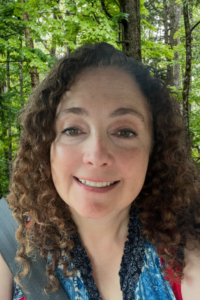 Amy Walsh writes heartfelt Christian fiction that blends faith, hope, and a touch of humor. Whether she’s crafting stories of second chances, unexpected grace, or quiet miracles in small towns, Amy delights in creating characters who wrestle honestly with life—and come out stronger for it. A Pennsylvania native and fifth-grade teacher by day, Amy is also a proud wife, mom of three, and amateur herbalist who believes no story is complete without a little love, a lot of prayer, and maybe a homemade pie or two. When she’s not writing, you can find her hiking or playing pickle ball with family and friends, singing at church, or sipping tea while dreaming up her next adventure—preferably with a cat on her lap and a historical romance in hand. Amy believes stories have the power to heal, and her greatest joy is hearing from readers who say things like, “Your book reminded me that God hasn’t forgotten me.”
The Conversation
I love your attention to detail in your writing; it makes it authentic.