Pages of My Life – Deb Haggerty
Reading for Endorsements
When I consider endorsing a book, I look at several items:
- Do I know the author, either personally or professionally? Am I familiar with their other work? Do I know them to be honest—writing from their own hearts and heads and not using AI to script their story? Am I willing to stake my reputation on their book? When I looked for endorsers for my book, I asked people who knew me and had a good idea of my story. I asked people who would be known to prospective buyers of this type of book. I only asked people I respected and trusted to give an honest endorsement.
- Does the book cover an area or topic with which I am either familiar or an “expert” on? Do I write this kind of book? Is this a genre I read consistently? If I am known to rarely read nonfiction, an author with a nonfiction book would not want me to endorse the book—unless, of course, the topic and writing were so fascinating I couldn’t put the book down and wanted more. The same goes for fiction—authors who write historical fiction would not ask me to endorse their books because I am a mystery/suspense and speculative fiction fan.
- If nonfiction, is the theology one I agree with? Is the topic relevant to today or a rehash of a familiar theme? Does the writing interest me enough that I want to read past the first chapter? Does the author have expertise in the area about which they’re writing?
- If fiction, is the story a familiar one where the reader will immediately guess the ending? Is the story arc written well? Are the characters believable—do we care about them? Does the book have I-can’t-put-it-down-ability? Would I recommend the book to others? Does the author know the audience for whom they’re writing? And does the story and writing style apply to that audience?
- Writing style: Is the book/manuscript formatted for easy reading? Are the PUGS done well (punctuation, usage, grammar, spelling)? Are there frequent typos or spacing errors? Are the fonts and line spacing readable for the designated audience (granted the formatter of the book determines these things as do publishers)? Does the writing flow from one sentence to the next, one paragraph to the next, one chapter to the next? Does the book hold my interest? Nothing causes me to put a book down faster than typos, misspellings, and bad grammar. And I dislike ethic spelling and punctuation too, especially if it’s continued much past the introduction of the character.
In other words, do your research before you ask someone to endorse your book. Know that many people do not read endorsements and don’t care about them. So find a few, relevant people to endorse you/your book. Quantity here is not as important as quality.
Join us today on Pages Of My Life where author Deb Haggerty what she looks at when considering endorsing a book. Share on XMeet Deb Haggerty
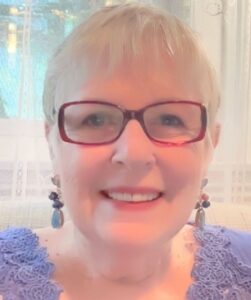 Deb Haggerty is the Publisher of Elk Lake Publishing, Inc., a traditional, royalty-paying publisher that works with its authors in a nontraditional way to “Publish the Positive.” Elk Lake looks for new writers with excellent manuscripts and publishes all genres of Christian fiction and selected nonfiction.
A published author, blogger, and professional speaker, she’s been writing stories for over forty-five years. In 2019, she released two books: Experiencing God’s Love in a Broken World—A Spiritual Journey, co-written with her husband, Roy, and These Are the Days of My Life, a memoir with a bonus section of business tips.
She has spoken throughout the United States and has been on the staff at several writers’ conferences including the Florida Christian Writers’ Conference, the Blue Ridge Mountains Christian Writers’ Conference, the AWSA Conference, Mt. Hermon CWC, Montrose CWC, NCWA Renewal, and Glorieta CWC.
Deb and her husband, Roy, have been married for over thirty-seven years and live in Plymouth, MA.
No Comments