Pages Of My Life – A.C. Williams
How do you keep track of what you’ve read?
If you read a lot (or even if you don’t), it’s a good idea to keep a running list of books you’ve completed. For one, it prevents you from re-reading a book unintentionally, but it’s also fun to be able to share with others in case you can connect with someone else who had similar feelings about the story that you did.
There are several ways to keep track of what you’ve read and why and what you thought about it. Let’s talk about a few that might interest you.
The most obvious way to keep track of your reading is with an app like Goodreads. Personally, though, Goodreads has never been my favorite. It’s always been a bit glitchy. Recently, a friend introduced me to the Bookmory app, and I really like it a lot. It includes a timer feature so you can actually keep track of how many hours you read every day. It has a calendar that will keep track of what you are reading on which day. I’ve been using it for a while now, and it’s a really neat app.
Join us today on Pages Of My Life where author A.C. Williams tells us about how she tracks her reading. Share on XBut what if you’re not an app person? What if you prefer something more analog? Some readers love to keep reading journals where they design and populate beautiful notebooks that feature ratings, cover images, reviews, and all sorts of other materials. Personally I don’t have time to create and maintain something like that, but I know many people who do.
I do love to watch people make reading journals, though, and I’ve included a link to my favorite Bullet Journal Content Creator for a special video she made asking 15 people for their best tips in making book journals.
Another way some readers like to keep track of what books they’ve read is through reading challenges. It’s sort of like playing bingo, but instead of random letter and number combinations, you read books that fit specific categories. Usually reading challenges are done in a group setting, like a book club or a small ground, but you can complete them individually if you so desire.
Here are some ideas for different categories you can use for a reading challenge bingo card:
- A specific trope (friends to lovers, forbidden love, etc.)
- A specific genre (fantasy, steampunk, YA contemporary, etc)
- A specific color in the book’s cover
- A specific word in the title
- A specific animal companion in the story
- A new author you haven’t read before
- An author from a heritage different than yours
The options are limitless, actually, which is amazing because it allows people to design their own reading challenges based on a given topic or theme.
Several different sites feature pre-made Reading Challenge Bingo Cards. Some of them even have featured hashtags which allow you to connect on social media with other readers who are also participating in the challenge.
Some bingo cards are specifically focused on a certain genre, like fantasy but you can branch out to focus on any genre. Consider the kind of reading challenge you could do with a mystery. You could create a mystery reading challenge with all sorts of fun options:
- A book where the butler did it
- A book where the butler didn’t do it
- A book where the killer is discovered
- A book where the killer gets away
- A book with a female detective
- A book with a non-human detective
This is also something that can be a lot of fun if you have young readers in your house. Scholastic has a Book Bingo card that’s free to download. Reading challenges with bingo cards can be fun competitions with quirky prizes that really motivate reluctant readers.
I’m not sure who remembers the old school Book It! program that was popular in the 80s and 90s. It was formative for me in my childhood. I still have my Book It! pins that are studded with gold stars, and I display them proudly.
If you are looking for a list of reading challenges to participate in, I found several websites with amazing free resources. Obviously, we are past the middle of 2025. But it’s highly likely that all these resources will have challenges for 2026, and if you’re interested, I’m betting you can get involved from the very start.
What is your favorite way to keep track of your personal reading progress throughout a year?
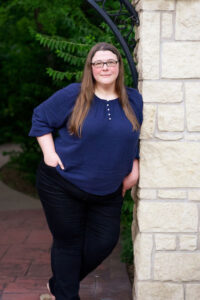 Author A.C. Williams is a coffee-drinking, sushi-eating, story-telling nerd who loves cats, country living, and all things Japanese. She’d rather be barefoot, and if she isn’t, her socks won’t match. With fifteen published books in both fiction and non-fiction, she is a Realm Award winner and a Selah Award finalist, as well as the 2022 Arise Daily Writer of the Year. She is also a popular monthly contributor to two blogs ranked in Writer’s Digest’s Top 101 sites for authors.
The Conversation
I use Goodreads, but I wish I had time to keep a reading journal. Goodreads remindss me if I’ve already read a book. Sometimes I read it again anyway.😂 Thanks for sharing, Amy!